Chico Elite Stucco: Stucco Contractor in Chico, California - Residential & Commercial

Chico Elite Stucco provides stucco installation, repair and resurfacing for residential and commercial properties throughout Chico and Butte County. We install complete exterior stucco systems for new construction, additions, remodels and siding conversions, and we repair everything from isolated cracks and impact damage to deteriorated walls that need removal and replacement. We also provide stucco painting and coatings, inspections, moisture remediation, decorative finishes, stone veneer and interior plaster.

For new stucco installation, we build portland cement plaster systems to ASTM C926 over metal lath installed to ASTM C1063. That includes the water-resistive barrier, lath, flashing, control joints and finish that work together behind the surface you see. We build traditional three-coat stucco to a nominal 7/8-inch assembly, while one-coat and other systems may be better suited to different substrates, schedules and building conditions.

Repair starts with finding out whether the problem is limited to the surface or extends into the wall assembly. Small cracks and damaged sections can often be repaired without disturbing the surrounding stucco. Widespread deterioration, recurring moisture problems or failed underlying materials may call for remediation, resurfacing or full removal and replacement. We also match existing texture and color, including integrally colored and acrylic finishes where appropriate.

We have more than 15 years of stucco experience and are licensed and insured. We work throughout Chico and Butte County, including Oroville and the ridge communities, and also serve parts of Glenn and Tehama counties. Every project is specified for the existing wall, exposure and drainage conditions it faces. Call or use our online form now for a free estimate.

Get A Free Estimate

Why Choose Chico Elite Stucco as Your Stucco Contractor in Chico

Chico Elite Stucco works to a clearly defined scope, settled before anyone opens a bag of material.

  • 15+ years in business, on residential and commercial work.
  • Licensed and insured, with general liability and workers' compensation coverage.
  • Written scopes that name the system and the finish before you approve anything.
  • Free on-site estimates, with no charge for the visit.
  • Built to ASTM C926 and C1063, the standards for applying plaster and for the lath under it.
  • Texture and color matched, so repairs and additions blend in rather than stand out.
  • Moisture checked before we price, so the scope fits the actual problem.
  • Clean, protected job sites, with plants and hardscape covered and the property left tidy.
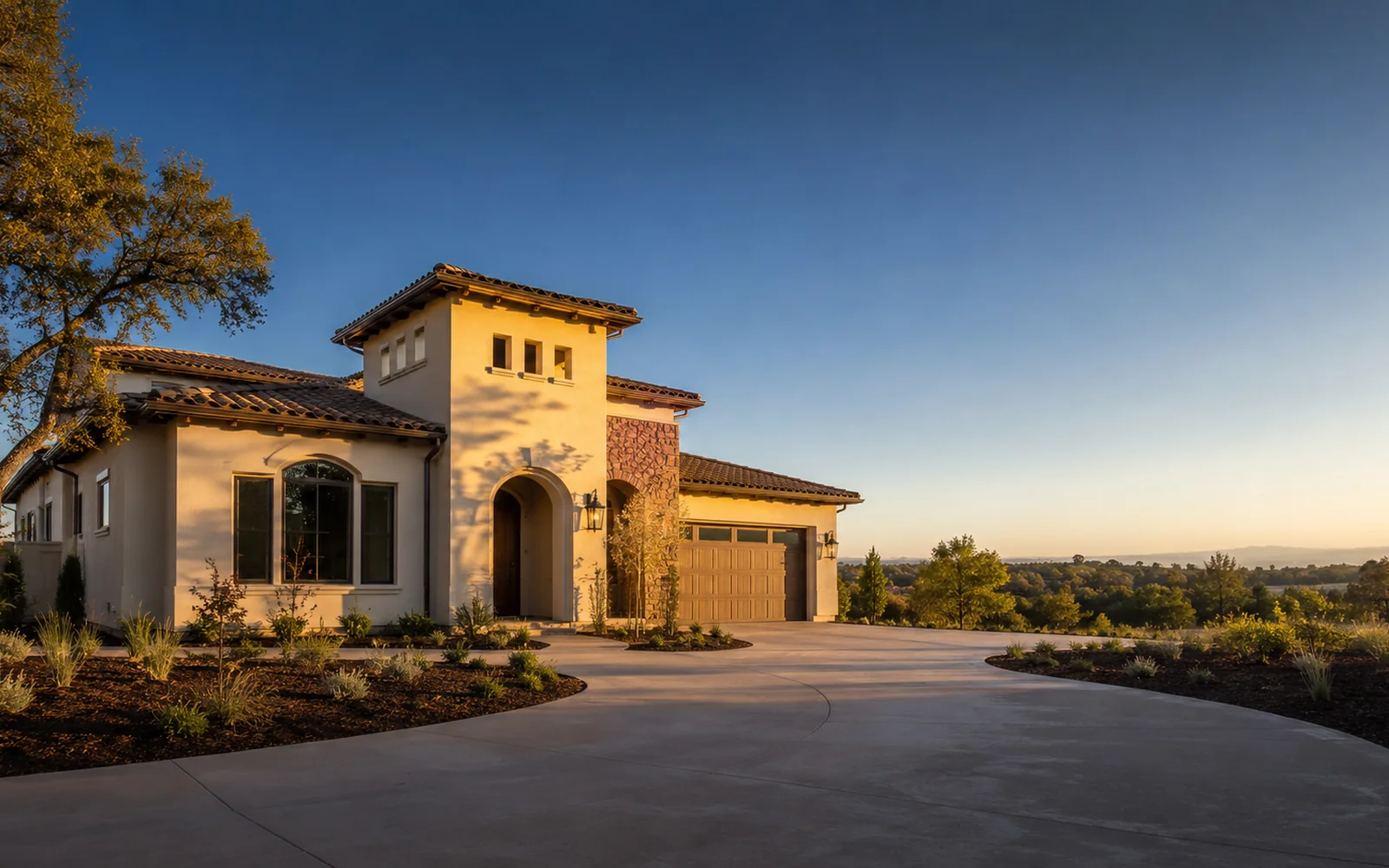
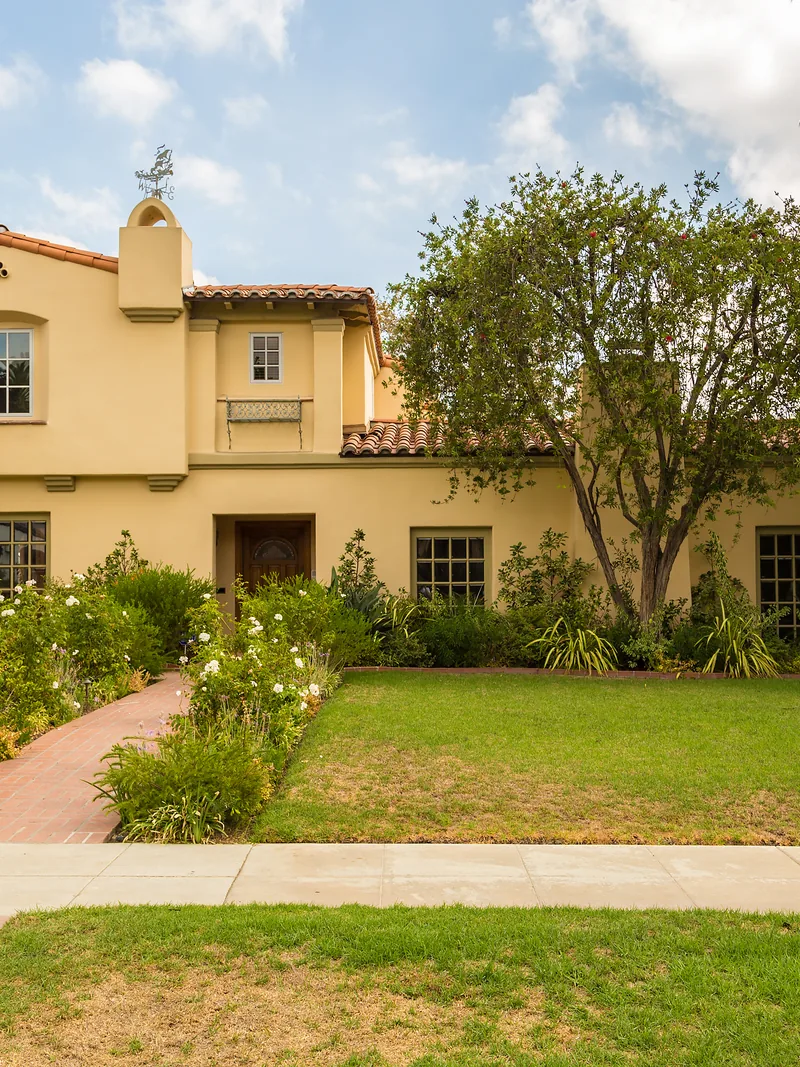
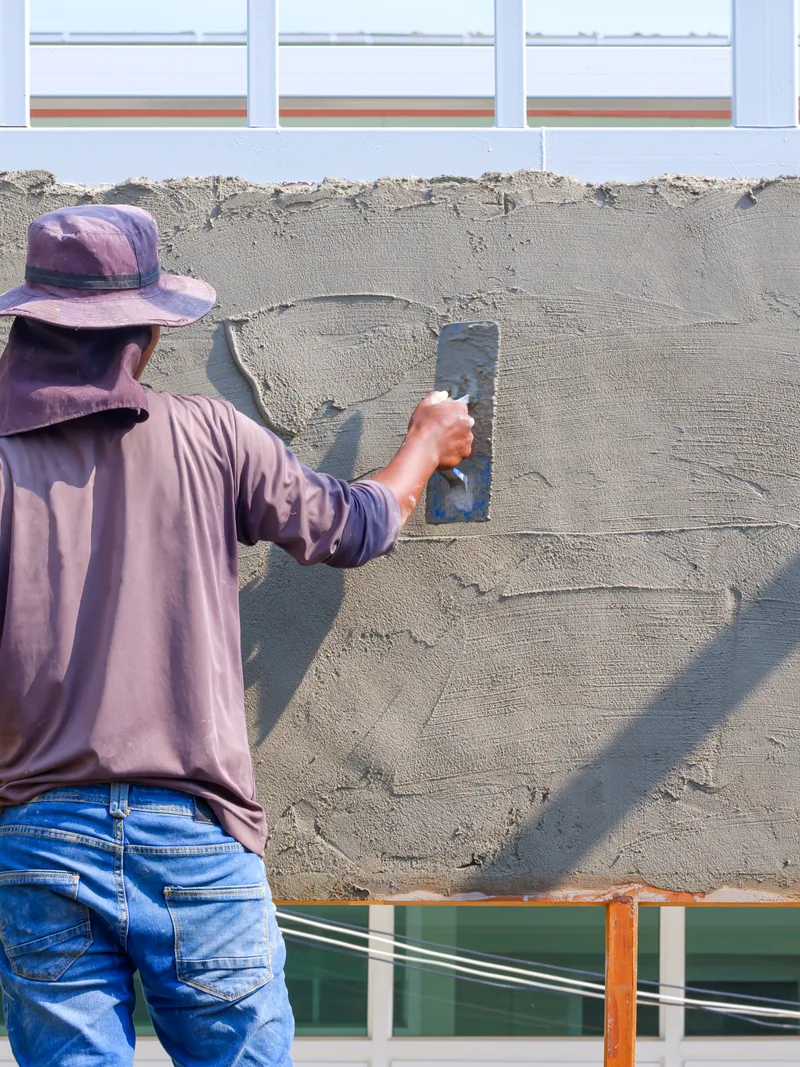
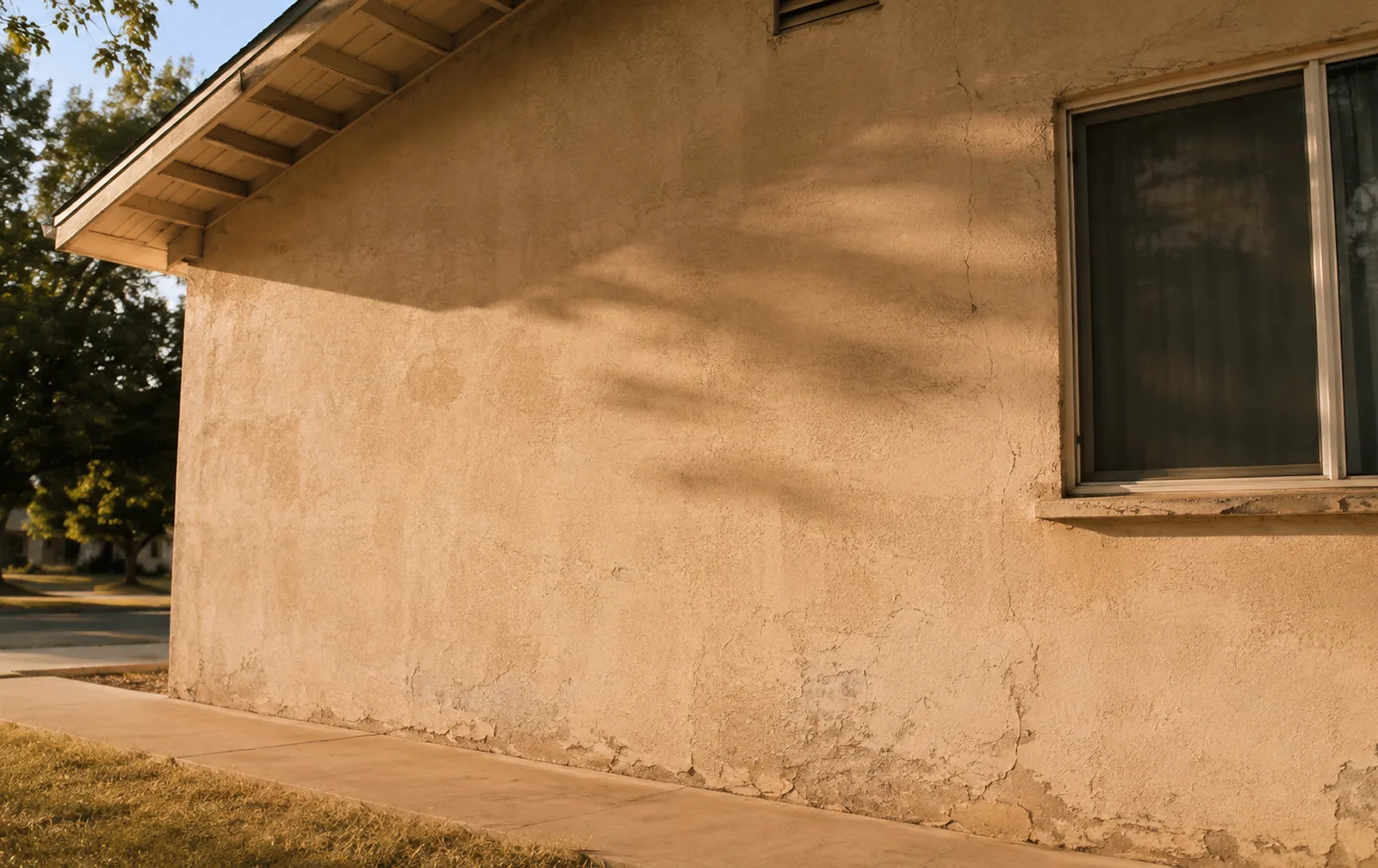
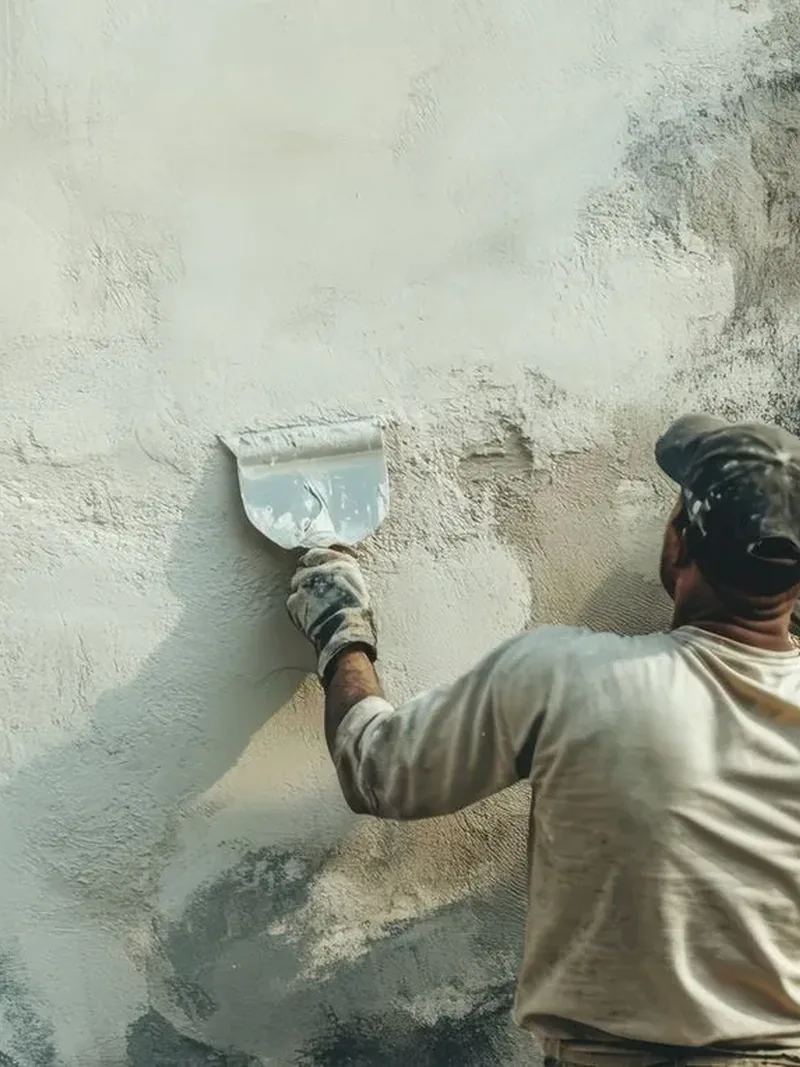
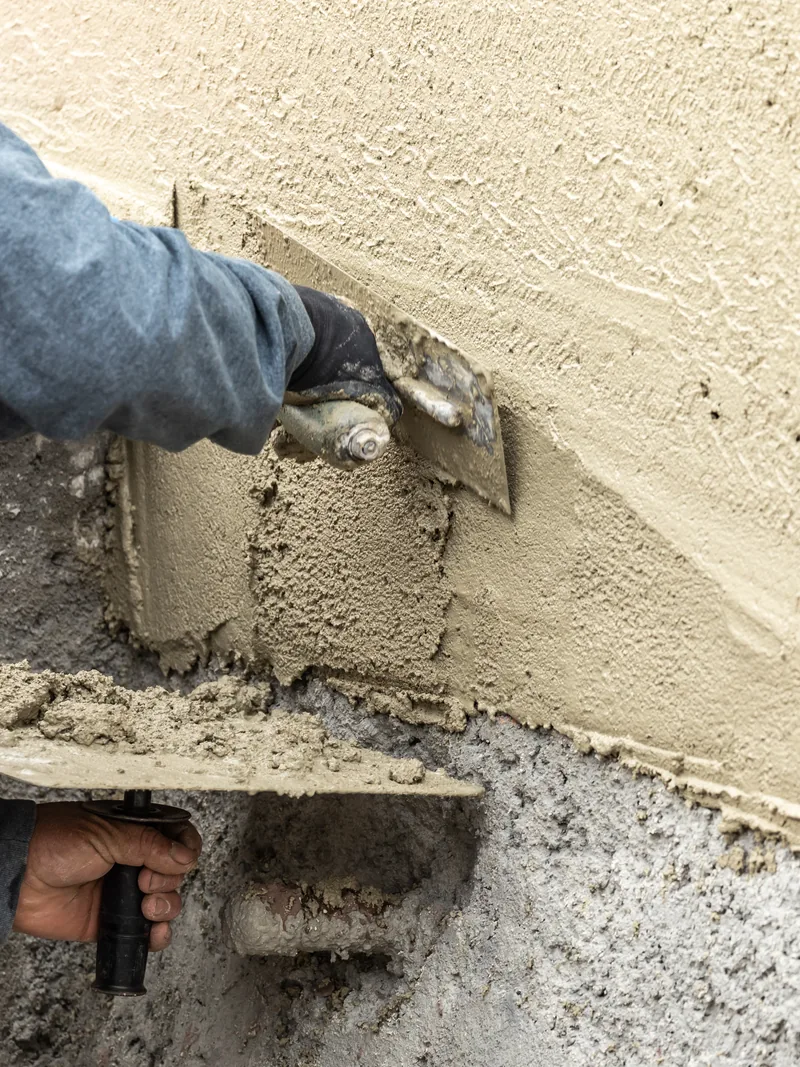
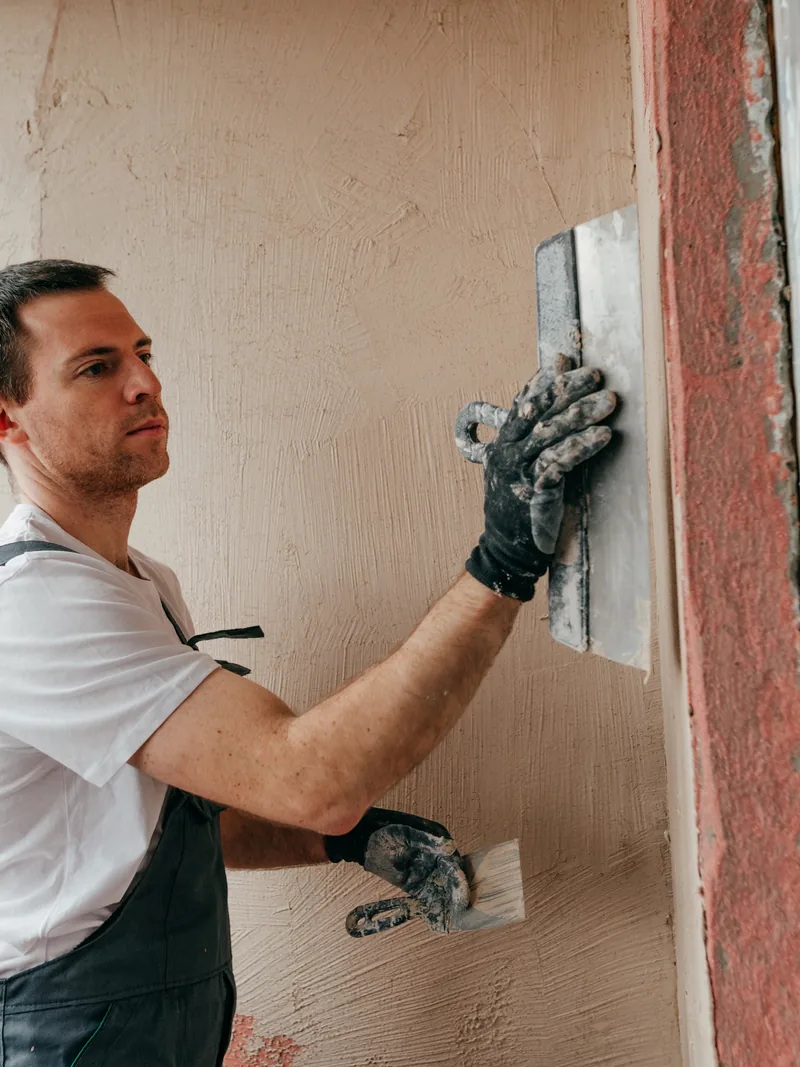
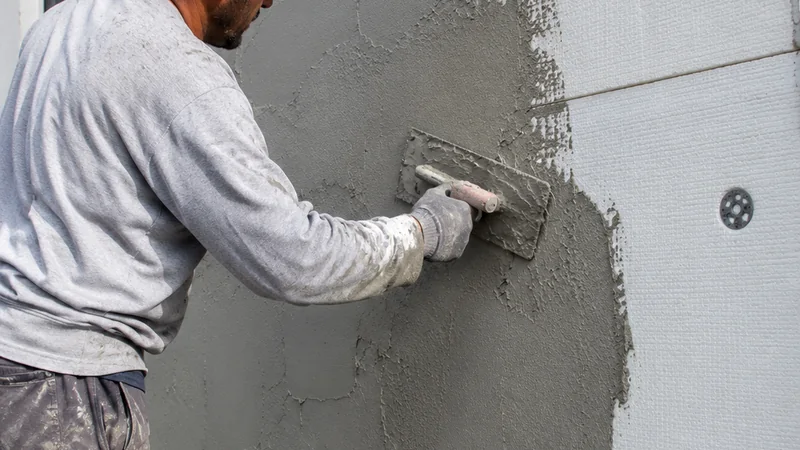
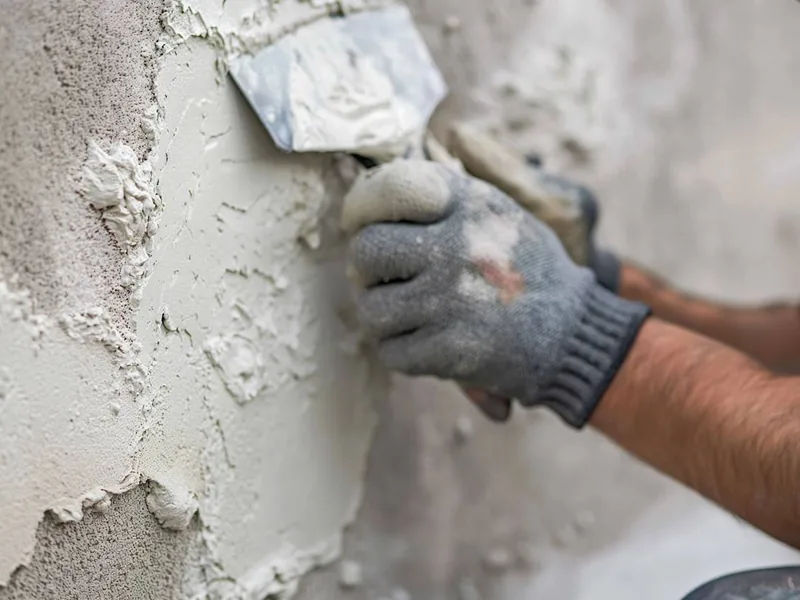
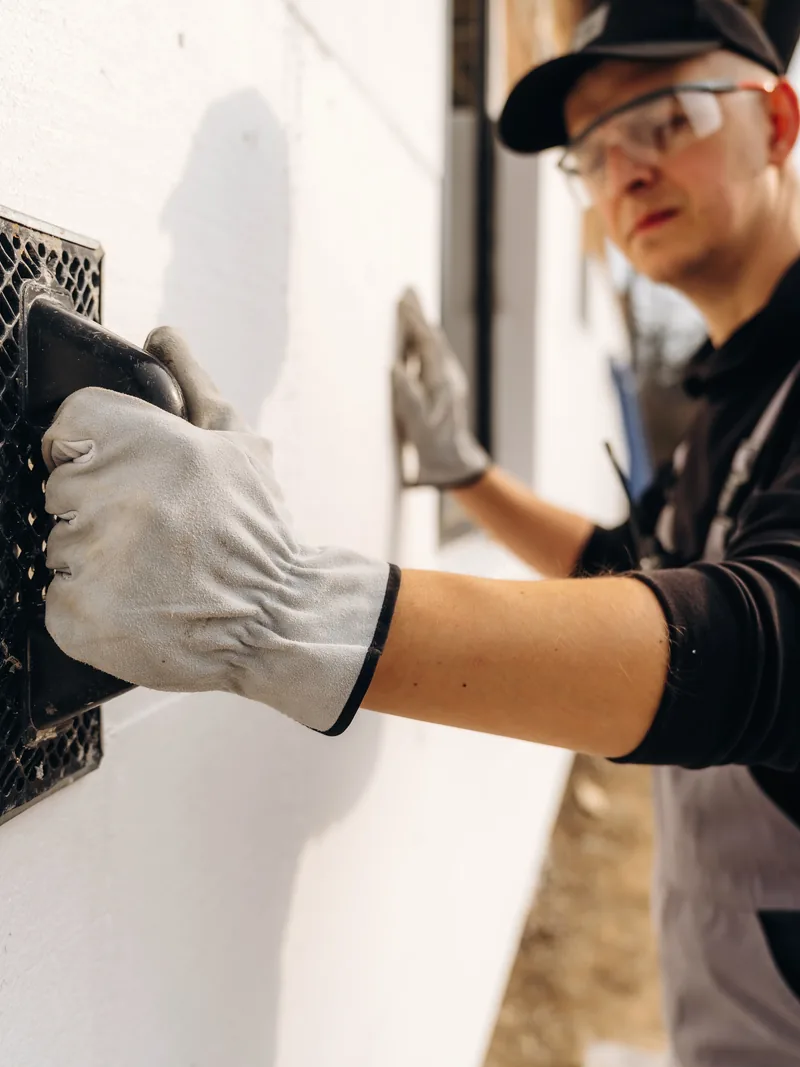
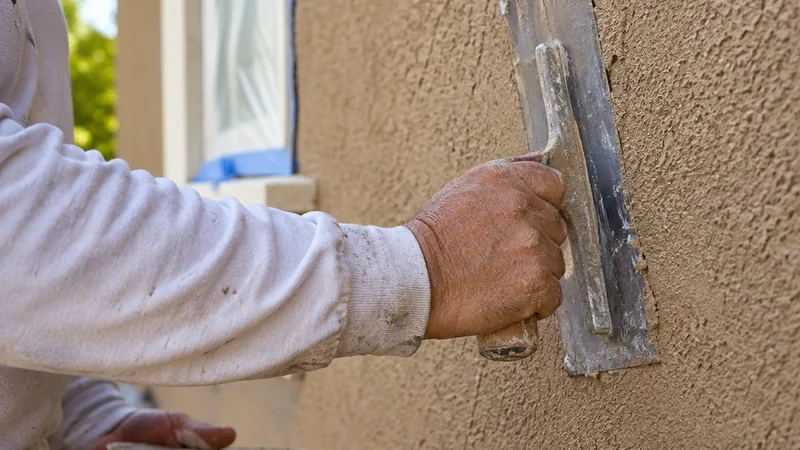
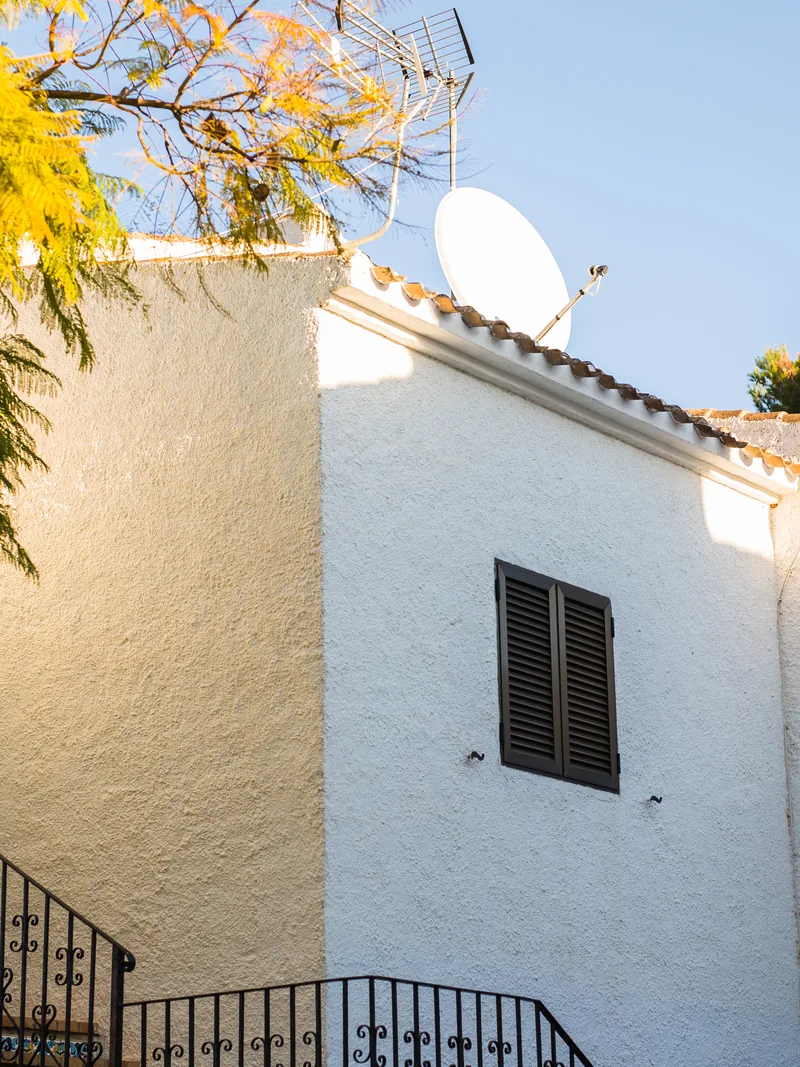
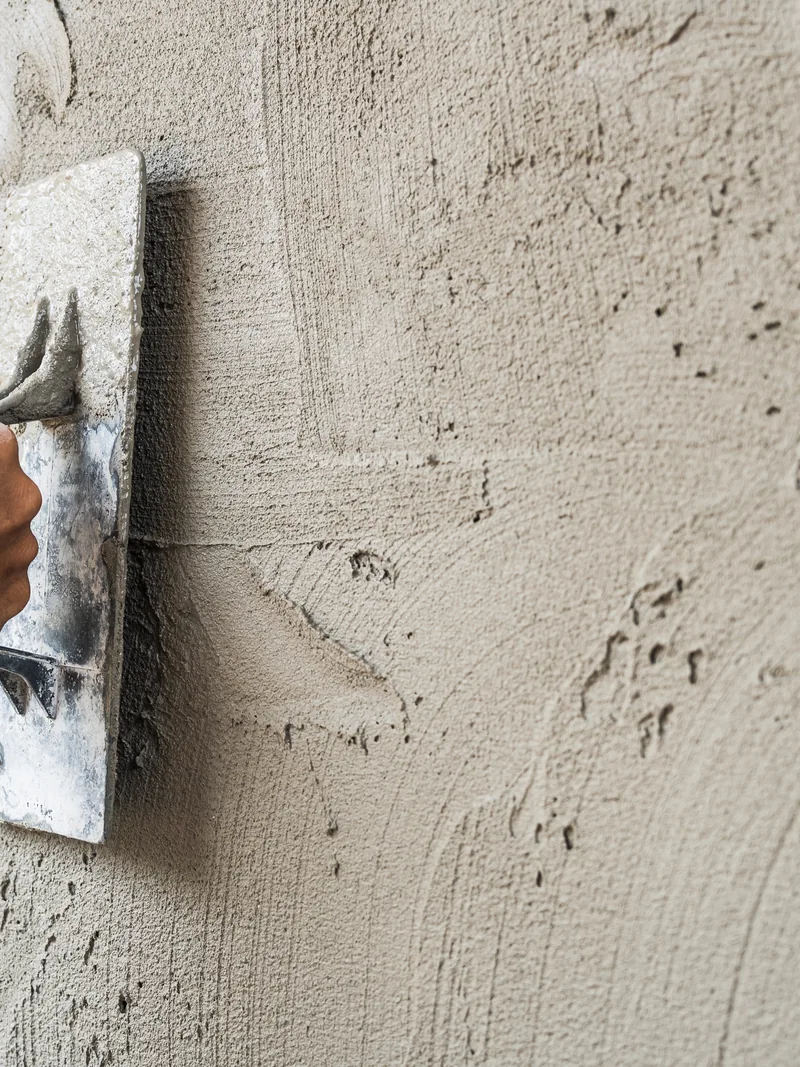
Stucco-finished home exterior in the Chico area Plasterer applying a stucco finish coat to an exterior wall

Stucco Installation for Homes, Additions and Remodels

New stucco installation covers complete exterior wall systems, additions, remodels and siding conversions. On new construction, the work begins with the wall assembly before the finish is ever visible. On existing homes, substrate preparation and system selection depend on what is already there: the sheathing, water-resistive barrier, lath and surrounding construction.

Full-Wall Work on Existing Homes

On an existing home, the system is chosen around what the plaster will actually sit on. Over wood sheathing, the water-resistive barrier goes on as independent drainage layers rather than a single sheet. We lay out control joints around wall lengths and openings before the lath goes up so movement is planned into the assembly instead of showing up later as uncontrolled cracking.

Where old siding or an existing finish has to come off first, we inspect the exposed wall before rebuilding it. That gives us a chance to address damaged sheathing, failed barrier material or poor detailing around openings before those conditions are covered again.

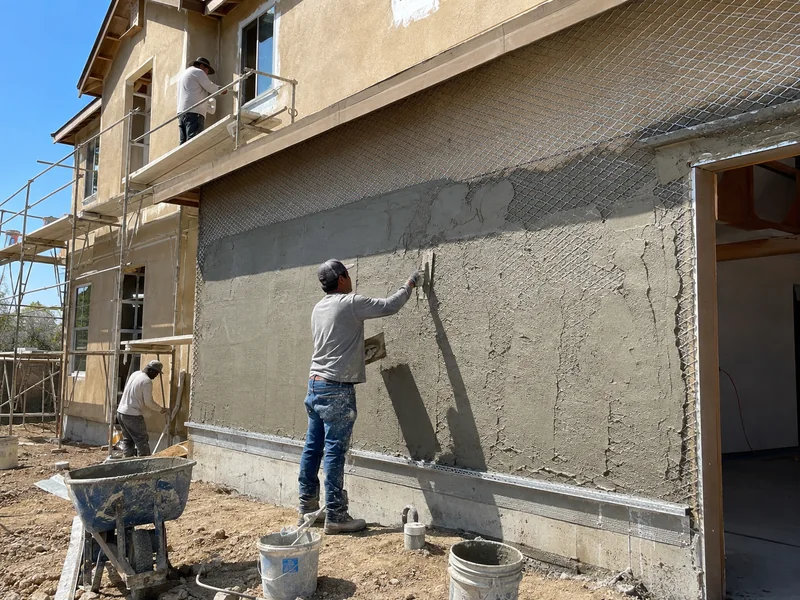
Stucco crew applying a scratch coat over lath on a home under construction

Additions, Remodels and Siding Conversions

Additions require the new wall assembly to tie into the existing house while also matching the texture and color of the original finish. Remodels can involve the same work where windows or doors move and the water-resistive barrier has to be integrated around the new openings.

A siding conversion replaces wood, board siding or panel siding with a compatible stucco assembly after the underlying wall has been prepared for plaster. Where a property sits in a designated wildland-urban interface area, the noncombustible nature of cement plaster is also one reason builders specify it.

What a Complete Stucco Installation Includes

A complete installation is more than the finish coat you see from the street. The wall has to manage water, movement and the weight of the plaster before texture and color come into the picture.

Depending on the system, the work can include the water-resistive barrier, flashing, metal lath, weep screed, control joints and other accessories, followed by the plaster base coats and selected finish. Traditional three-coat stucco uses scratch, brown and finish coats to build a nominal 7/8-inch hard-coat assembly. One-coat systems use a different engineered build and may be better suited to particular substrates or project schedules.

The details around windows, doors, roof intersections and the bottom of the wall matter just as much as the plaster itself. Those are the places where the drainage assembly has to remain continuous so incidental water can move behind the finish and back out of the wall.

Stucco Repair, Resurfacing or Replacement: Which Scope Your Wall Needs

Most stucco repair starts with a diagnosis rather than a price. The right scope depends on whether the damage is localized or widespread, and whether the problem is limited to the finish or extends into the wall assembly. We use a moisture meter and a probe opening where the surface does not tell us enough.

Cracks, Bulges and Water Intrusion

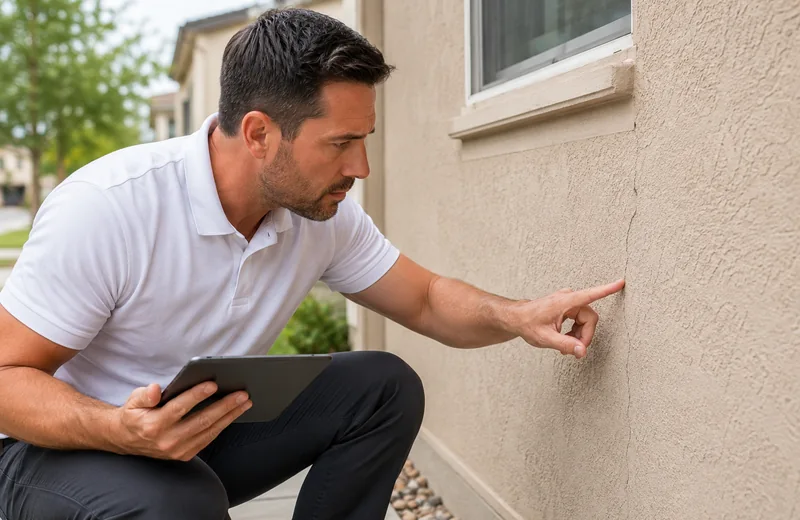
Crazing, a network of shallow hairline cracks, usually stays at the surface. Cracking that runs off the corners of windows and doors points to movement. A crack that widens with the seasons raises questions about joint spacing, and one running continuously through the wall needs its cause established before anything else.

A bulge, or a hollow sound when you tap, often indicates loss of bond behind that area. Efflorescence, the chalky white bloom below windows and near the base, can indicate moisture moving through the assembly. A patch that still reads as a patch usually points to the wrong mortar or the wrong pigment.

When Repair Is Enough

Repair is usually enough for isolated cracks, impact holes, or a single damaged section when there is no sign of moisture behind the stucco and the surrounding plaster remains well bonded.

When Resurfacing Is the Right Call

If the existing stucco is well bonded and free of underlying moisture problems, a new finish coat can renew the texture and color without tearing off the wall.

When a Wall Has to Come Off

Widespread deterioration, a failed assembly, or patches that keep letting go usually mean the wall will not hold another surface treatment. Replacement is also the one scope where you can change the system, not just the color.

When the Problem Is Behind the Stucco

Sometimes moisture or an assembly defect sits behind an intact-looking surface. Coating over it only postpones the repair.

Our Other Stucco Services in Chico and Butte County

Stucco Removal & Replacement

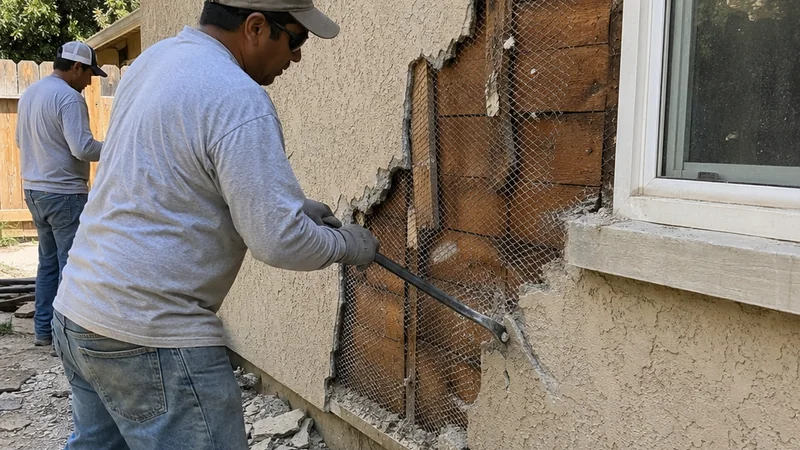
Removing failed stucco to expose the lath for replacement

Replacement is for a wall system too deteriorated to keep. We tear off one elevation at a time, inspect the sheathing and framing once it is open, and rebuild with a new barrier, lath and accessories. Pre-1980 construction gets material testing before anything is disturbed.

New Construction Stucco

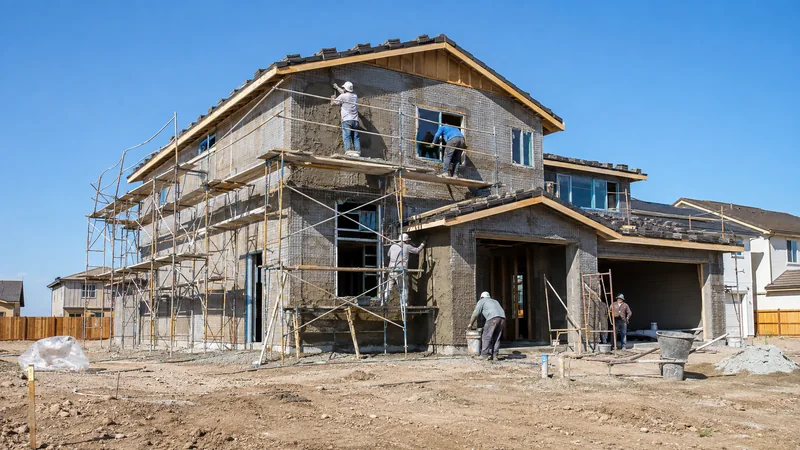
Stucco going up on a new building under construction

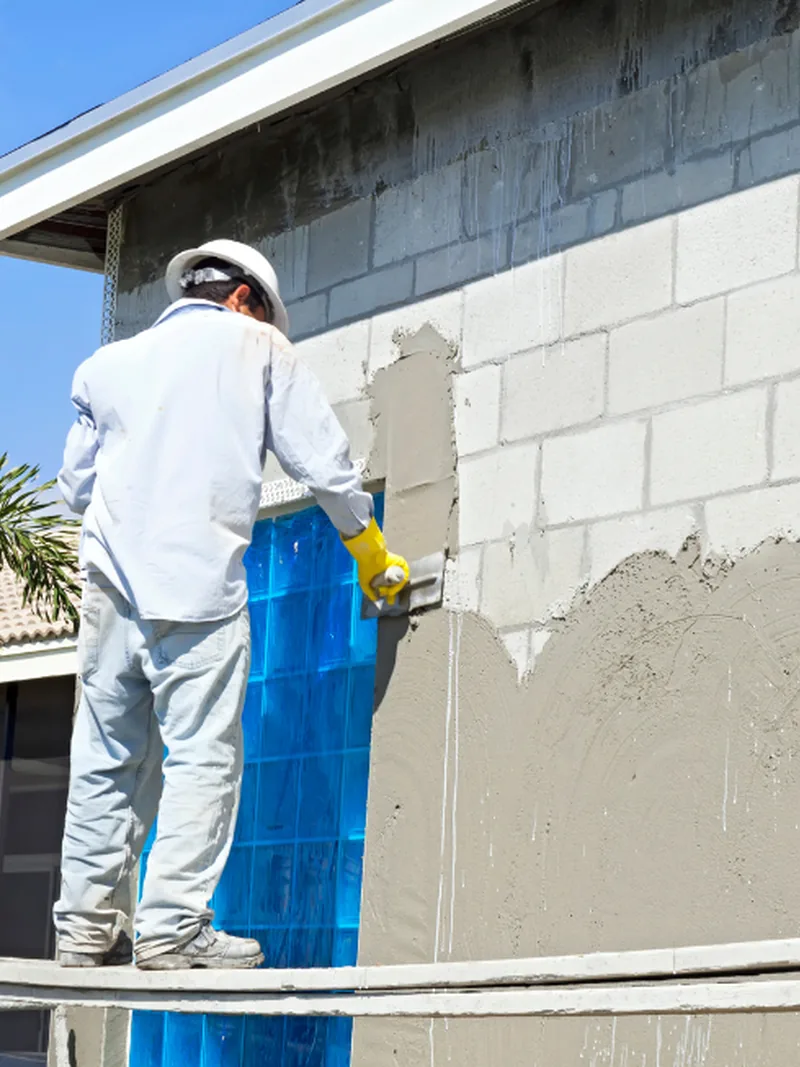
New construction stucco has to meet the builder's schedule and inspection sequence. We coordinate the lath inspection hold point with the general contractor before the scratch coat begins. Flashing sequencing at windows and doors is planned with the framer and window installer. For ridge rebuilds in the wildland-urban interface, stucco qualifies as a noncombustible exterior wall covering. The full assembly, including eaves, soffits, and vents, still has to meet the applicable requirements. On multifamily and tract work we phase the faces so inspectors get access without the schedule stalling.

Stone Veneer & Stucco

Home combining stone veneer with a stucco exterior

Stone veneer must join the stucco assembly without interrupting its drainage plane. We install adhered manufactured stone veneer over metal lath and a scratch coat, which gives the mortar a firm bond. Behind the veneer, two layers of water-resistive barrier separate the stone from the sheathing. We maintain the required clearance and drainage gap at the base of the veneer. Veneer can define a wainscot, column wrap, chimney chase, or entry surround. You pick the stone profile and mortar joint style, and we make sure the veneer and stucco drain properly as one wall system.

Stucco Remediation

Treating a moisture-stained stucco wall during remediation

Remediation goes after the moisture pathway behind the finish rather than the mark it leaves. We map the readings, take out the sections that need it, and rebuild the barrier, flashing and terminations so the wall drains again. Where biological growth is visible, a qualified independent specialist handles that assessment.

Stucco Repair

Patching a damaged section of exterior stucco

Repair keeps the sound wall and replaces only what has failed. We cut back to solid material and lath, then rebuild the patch in the same system as the wall around it. Moving cracks take an elastomeric sealant, impact damage a polymer-modified mortar. The texture match decides whether you can pick it out afterwards.

Stucco Painting & Coatings

Applying a protective coating to an exterior stucco wall

Coatings give sound stucco new color and a weather layer, without a new finish coat. Elastomeric paint forms a thick, flexible film that bridges hairline cracks and follows minor wall movement. A high-build acrylic breathes better than elastomeric, which suits a wall that needs to let moisture out. We complete mildew and grime removal, apply stucco-specific primer, and use a two-coat application over the prepared surface. Some owners come for the color and some for the protection. A coating does both.

Decorative Stucco

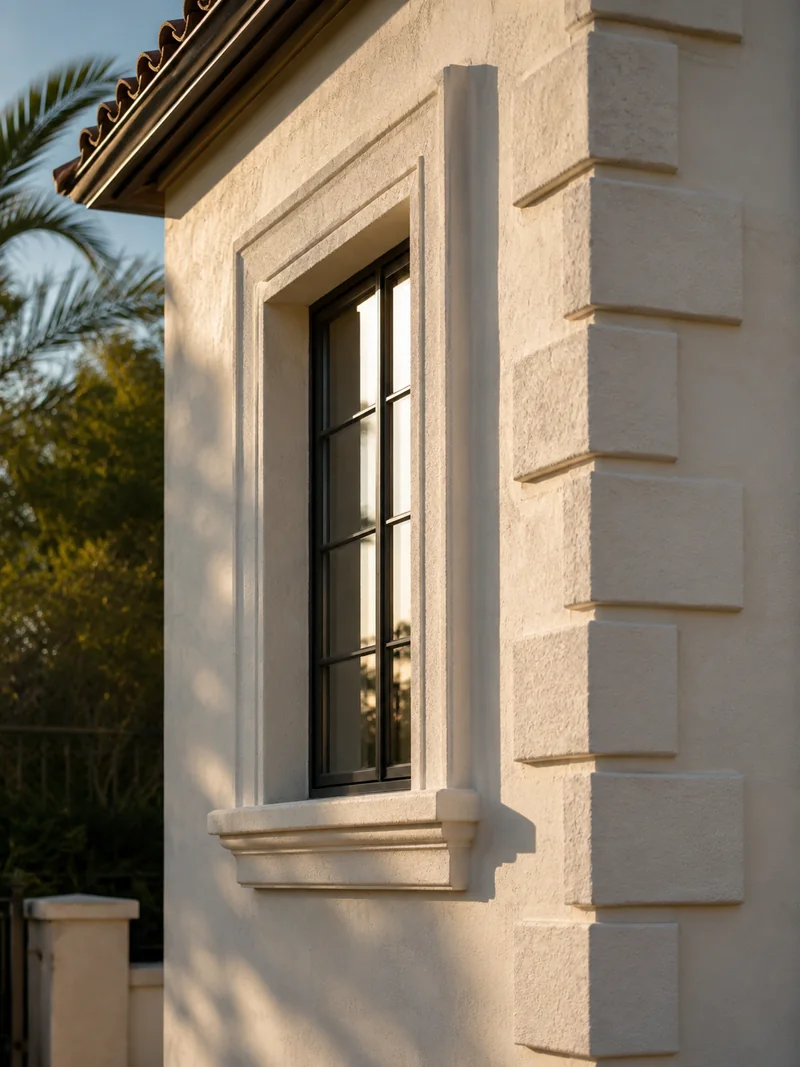
Decorative stucco window surround with molded trim and quoins

Decorative stucco adds three-dimensional detail that becomes part of the wall assembly. We shape architectural foam trim into bands, sills, and window surrounds. Corbels and quoins can add deeper shadow lines at entries and corners. Each piece receives a mesh-reinforced base coat followed by the wall finish. We also form arches and columns or cut reveals and score lines into broad wall fields. A Santa Barbara Mission finish or smooth troweled surface can define a feature elevation. Because the detail is coated as part of the wall, it weathers and moves with everything around it.

Stucco Plastering

Applying cement plaster to an exterior wall

Stucco is part of the broader plastering trade, and our plaster work goes beyond the main wall fields. We plaster soffits, porch and patio ceilings, garden and site walls, chimneys and parapets, so the whole envelope reads as one surface. We also restore historic lath-and-plaster exteriors on older Chico houses where the original base is still sound. That is repair rather than replacement, and it is worth doing by hand: a modern spray rig does not reproduce the original hand-floated surface.

Stucco Inspection

Inspector taking moisture-meter readings on a stucco wall

A stucco inspection reports what a wall is actually doing, in writing, most often before a sale. Our stucco specialist takes moisture meter readings at wall bases and below doors and windows. If a reading warrants a closer look, probe point testing checks the concealed layer through a small opening. We also check the flashing and drainage details around openings and at grade. Buyers, sellers, and property owners receive a documented report, with photographs, marked elevations, findings and a proposed scope, that they can use during the transaction or when planning repairs.

Interior Stucco

Applying interior plaster inside a home

Interior plaster gives a room a hard mineral surface with more depth than painted drywall. We use veneer plaster over blueboard, a thin hard coat applied over a gypsum base. Mantels, niches and accent walls can take smooth lime plaster or a Venetian-style finish, with the trowel controlling sheen and color. A masonry or framed fireplace can be refinished in smooth, mineral or hand-troweled plaster without rebuilding the surround. In an occupied home we work with containment and dust control so the rest of the house stays usable.

Stucco Systems and Finishes We Install

One-Coat Stucco

One-coat stucco base applied in a single pass

A fiber-reinforced one-coat base uses a single-pass application over approved foam or sheathing. The engineered mix follows its manufacturer evaluation report, which sets the tested components and installation requirements. Its thinner profile and shorter application schedule suit many new construction projects.

Traditional Three-Coat Stucco

Applying a stucco coat over metal lath

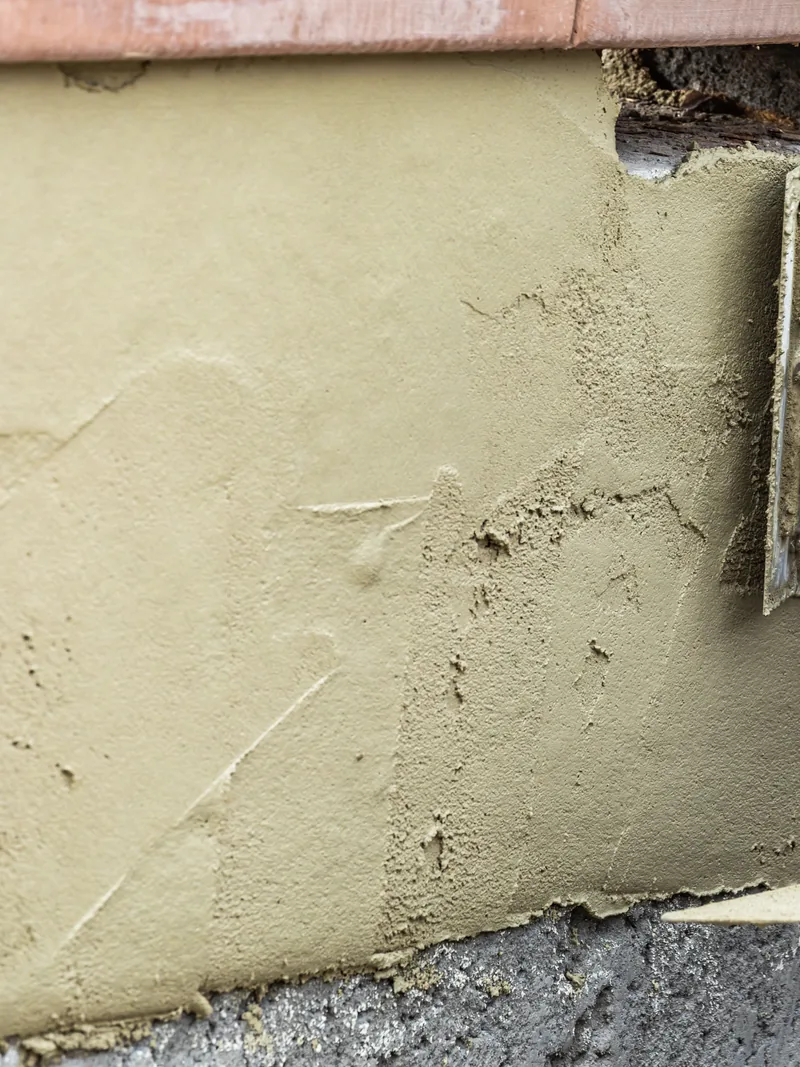
Three-coat stucco goes on in three passes over metal lath: a scratch coat, scored while wet so the next layer grips it, then a brown coat that flattens the wall, then the finish you actually see. The 3/8 + 3/8 + 1/8 inch layers create a nominal 7/8-inch build under ASTM C926. Staged curing produces a dense, durable hard-coat assembly.

EIFS and Synthetic Stucco

Floating the base coat of an EIFS wall

EIFS, short for exterior insulation and finish system, combines expanded polystyrene foam board, a mesh-reinforced base coat, and a synthetic finish.

Early EIFS was a barrier system: the finish itself was meant to be the waterproofing, with no drainage path behind it. On wood-framed houses, water that got in had nowhere to go and sat against the sheathing. That failed, and the system was redesigned around a drainage plane. Code now requires EIFS with drainage over framed walls, and barrier EIFS only over concrete or masonry. The insulation gives EIFS the highest thermal value among these three systems.

Acrylic Stucco Finishes

Troweling an integrally colored acrylic stucco finish

An integrally colored acrylic finish goes over an approved base as a finish coat with real body, thick enough to carry its own texture. Its flexibility limits fine surface crazing on walls that move with the seasons.

Acrylic finishes come in a wide range of colors and textures. Because the color is mixed through the coat rather than painted on top, a chip does not expose a different shade underneath, and a high-build acrylic breathes better than an elastomeric coating, letting moisture out of the wall. It suits an owner who wants a durable, low-maintenance finish that holds its color between recoats.

Stucco Resurfacing, Redashing and Exterior Renewal

When stucco resurfacing is the right scope, we apply a new finish coat over sound existing stucco rather than covering it with paint. The serviceable wall underneath stays in place.

Redashing and New Finish Coats

Redash means applying a new finish coat over sound existing stucco. We perform an adhesion check to find loose or weak areas before coating the wall. Where the substrate needs added grip, a bonding agent helps the new material adhere. A typical 1/8-inch finish coat adds texture and body without rebuilding the full three-coat assembly. That body is what separates a redash from a coating: enough material to carry a texture, not just a film of color.

Texture Changes and Color Updates

Resurfacing can also replace a dated texture with a smooth, sand, lace, or Santa Barbara finish. Thickness is the practical difference between it and a re-stucco. A redash adds roughly an eighth of an inch, so window trim, hose bibs, light fixtures, and dryer vents stay where they are. A full three-coat re-stucco builds close to seven eighths of an inch, and everything mounted on the wall has to be reset to suit it. Owners who like the house as it stands often choose the redash for that reason alone.

Renewed white stucco home exterior Troweling a fresh finish coat over existing stucco

Residential Stucco for Older and Newer Chico Homes

What a Chico home needs often depends on when and how it was built. Older plaster homes, mid-century tract houses and newer one-coat construction can look similar from the street while having very different wall assemblies behind the finish. That affects both how new stucco is installed and how existing stucco should be repaired.

Pre-War and Mid-Century Houses

Pre-war houses sometimes have stucco installed over older siding, so what sits behind the finish is not always what the plans suggest. Mid-century tract homes often have long uninterrupted wall runs where joint layout does much of the work. When that layout was poor, cracking tends to return in the same locations even after the surface has been patched.

Mid-century Chico home with a stucco exterior

Older walls also make matching more important. A repair has to blend into years of weathering, previous coatings and hand-applied texture rather than simply matching a fresh sample.

Newer Subdivisions

Newer subdivisions commonly use one-coat systems over foam or approved sheathing. These walls repair differently from traditional hard-coat stucco and can be difficult to identify accurately from the outside alone.

Where the history of a wall is unclear, we establish what is behind the finish before writing a scope. That keeps a localized repair from turning into unnecessary full-wall work and prevents a surface treatment from being used where the underlying assembly is the real problem.

Additions and Residential Remodels

Adding onto a stucco home creates two jobs at once: building the new wall correctly and making it look like it has always belonged to the house. The new water-resistive barrier and flashing have to tie into the existing construction, while the exposed finish has to match the surrounding texture and color.

Where an addition meets an older wall, we prepare a sample before the finish is applied. If the existing color has faded unevenly or the old texture cannot be matched cleanly across a narrow transition, resurfacing the larger elevation can sometimes produce a more consistent result than trying to hide a small seam.

Commercial Stucco and Multifamily Plaster Work in the North Valley

Commercial stucco work requires careful sequencing around other trades, inspections, tenant access, scaffolding, and project schedules. Our crews work in metal stud framing and lath at the scale multi-story elevations demand.

Buildings We Work On

Our commercial work covers retail, office, multifamily, and mixed-use buildings during new construction and renovation. Exterior repairs and restoration on an occupied property run alongside a business that has to keep trading. On large elevations, even a small texture or color mismatch can be obvious from a distance.

Working With Builders and Property Managers

We coordinate scaffold access and lift placement for multi-story elevations with builders and property managers. Phased tenant access separates active work zones from entrances and trade routes. Property managers receive access dates in advance so tenants can be notified before work begins.

What Chico's Climate Means for Stucco

Chico summers run to mid-90s highs with almost no rain, and then roughly 27 inches falls between late fall and spring. A stucco wall here has to handle both halves of that year.

Chico Heat and Sun

Portland cement plaster hardens through hydration, a chemical reaction that needs water held in the mix. In mid-90s July heat, evaporation can outrun hydration and leave a weak surface: fine surface cracking, and a chalky residue that comes off on your hand. We give each coat its own moist cure, work the elevations around the sun, and put larger projects into the milder shoulder seasons.

Sustained summer sun also fades pigment. That is why the finish material and the color get chosen for the exposure a wall actually gets, not just for how they look on a sample.

Winter Rain and Drainage

The rain arrives concentrated in the cool season, after summers that are effectively rainless. Behind the lath we lap the water-resistive barrier, the building paper or wrap that is the wall's real waterproofing, and tie the flashing at every opening into it. The weep screed at the base of the wall lets that water back out.

Control joints are the deliberate straight breaks running across a stucco wall, and their spacing is decided before any lath goes up. Poor joint layout is one cause of the hairline cracking that shows up near openings. Ground movement is another, since much of Chico sits on soils that swell through the wet winter and shrink back through the dry summer. Some cracks are not a stucco fault at all, and recoating those is money spent twice.

Sunny Central Valley home with a stucco exterior White stucco home with drought-tolerant landscaping

Choosing a Stucco Texture and Color

Finish choices give stucco siding its visual character. The textures used on Chico homes range from smooth hand-troweled finishes to coarse dash textures, and the right choice depends on the style of the building, the existing wall and how much surface variation the finish needs to accommodate.

The Textures Chico Homes Are Finished In

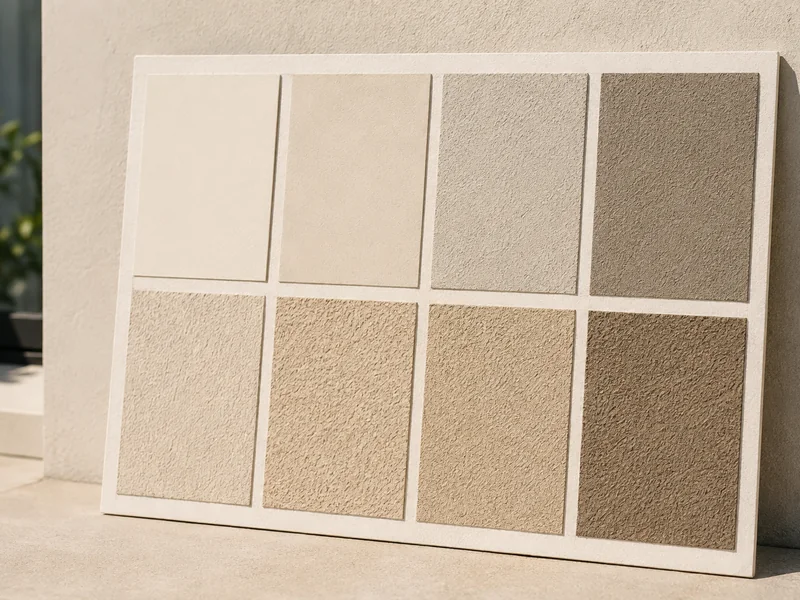
A smooth troweled finish creates a flat field that reveals every plane in the wall. A sand finish carries a fine, even grain that works well across broad elevations. Lace and skip-trowel textures leave broken raised patterns that create more visual movement. Dash texture is sprayed and left coarse, while a Santa Barbara Mission finish uses thin hand troweling for softer, irregular variation.

Stucco finish and color samples on a sample board

For additions and repairs, the goal is usually to reproduce the existing texture rather than introduce a new one. For resurfacing, the finish can be changed across the entire elevation.

Color, Fade and Matching an Existing Wall

Existing stucco is rarely the same color it was when first installed. Sun exposure, age, previous coatings and the direction a wall faces all affect how the finish looks today. West-facing walls in Chico usually show fading sooner than protected elevations.

We prepare a sample panel and match the existing texture and color before the finish goes on. We also record the pigment information used on the approved sample so later work can be matched more consistently.

Matching Existing Stucco

Matching a repair is not simply a matter of finding the original color name. Texture depth, aggregate, application method and years of weathering all influence how the finished surface reads next to the old wall.

A small patch can sometimes be blended into the surrounding finish. Where an entire elevation has faded unevenly or contains several previous repairs, resurfacing the larger wall may produce a more uniform result than trying to match several isolated areas.

How a Stucco Project Works with Chico Elite Stucco

Here is how a job with Chico Elite Stucco actually runs, from the first call to the last walkthrough. You get a written scope before you approve anything.

  1. 1

    Call or Request an Estimate:

    Call us or send the quote form with the wall's age, the changes you have noticed, and the areas involved. Photos help us understand what the visit should cover.

  2. 2

    On-Site Assessment:

    During the free on-site assessment, we complete an elevation walk around the property and note visible cracking and moisture signs. A sale or purchase can receive a documented inspection instead.

    Contractor assessing a stucco wall during an on-site visit
  3. 3

    Written Scope and Estimate:

    You receive a written scope that identifies the stucco system, finish, and proposed work. If the wall supports more than one sound option, we price each choice separately.

    Written stucco scope and estimate on a clipboard
  4. 4

    Sample Panel and Scheduling:

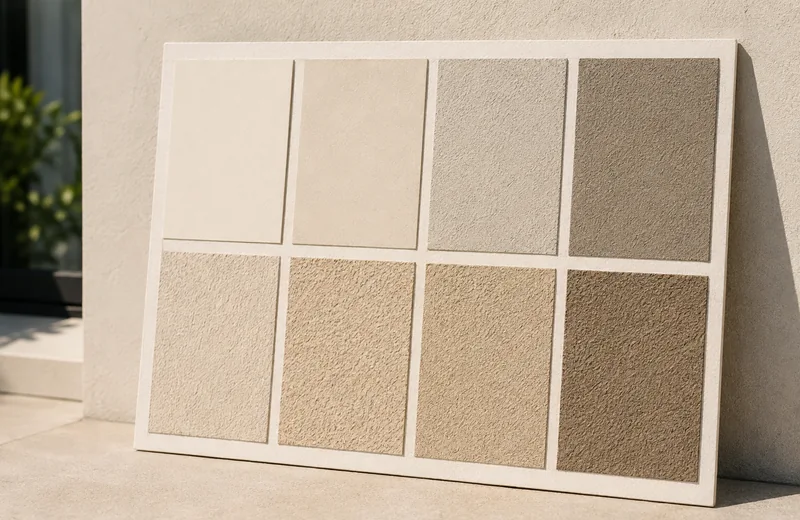
    You approve the texture and color before we schedule the job. We reserve dates that give the selected stucco system its required curing window.

    Stucco finish and color sample panel
  5. 5

    The Work and the Walkthrough:

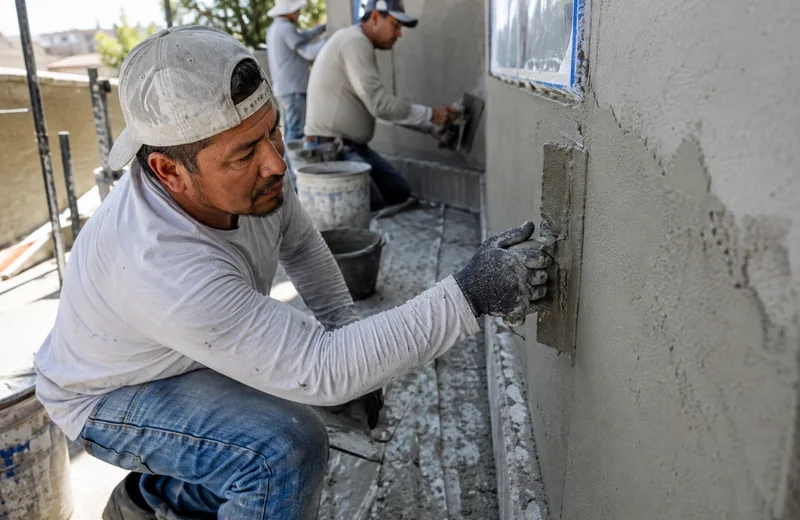
    Our crew sets up site protection for plants and hardscape, keeps the property orderly, and cleans up before leaving. You receive a final walkthrough, checked one elevation at a time.

    Crew applying a stucco finish coat to a wall

What a Stucco Contractor Costs in Butte County

Published national and regional pricing guides last reviewed in August 2026 provide context for stucco cost. The figures are approximate, are not specific to this area, and are not Chico Elite Stucco's prices. The broad market range for installed stucco is roughly $6 to $18 per square foot, while published repair figures commonly fall between about $600 and $2,700.

The size of the wall matters, but the condition behind the finish often matters more. Two projects with similar square footage can have very different costs depending on what has to happen before new plaster goes on.

New Stucco Installation

New installation pricing depends on the selected system, total wall area and how much preparation is required before plastering begins. One-coat systems generally fall toward the lower end of the market, traditional three-coat work carries more material and labor, and EIFS uses a different set of components and installation steps.

Access also matters. Multiple stories, scaffolding, lifts, complex rooflines and walls broken up by windows or architectural details all add time compared with a simple open elevation.

Stucco Repair

Repair cost depends less on the visible crack or stain than on how far the damage extends. A localized patch where the surrounding plaster and lath are sound is very different from opening a wall where moisture has damaged the barrier, metal lath or sheathing behind it.

Texture and color matching can also add preparation time because a successful repair has to blend into the surrounding wall rather than simply close the opening.

Removal and Replacement

Full replacement includes demolition and disposal before the new wall is built. Once the existing stucco is removed, concealed damage can change the scope if the sheathing, framing, barrier or flashing also needs attention.

That is why replacement estimates are based on the condition that can be established before demolition, with concealed conditions addressed once the wall is open.

Why Hire a Licensed Stucco Contractor in California?

A licensed stucco contractor is answerable for the work hidden behind the finish: how the wall was prepared, and how the lath and its supporting assemblies were set. We document general liability coverage and workers' compensation before a crew reaches your property.

What the C-35 Classification Covers

The Contractors State License Board (https://www.cslb.ca.gov/about_us/library/licensing_classifications/Licensing_Classifications_Detail.aspx?Class=C35) defines the C-35 Lathing and Plastering classification around lath, metal stud channel work, and plaster coatings. Its scope covers troweled and sprayed coatings, including soundproofing and fire-resistive products. It also covers the lath and metal stud channel work underneath, which is covered up once the plaster goes on. You can check any California contractor's license status and classification at cslb.ca.gov before you sign anything.

What Goes Wrong Without It

Lath layer failure starts when crews fasten the mesh flat to the wall instead of standing it off. Reversed barrier lap direction, weep screed omission, and missing control joints invite moisture trouble or random cracking. Eye-matched patches can remain obvious after weathering, while missing general liability coverage leaves the owner carrying avoidable risk.

Maintaining Stucco Between Recoats

Stucco siding needs little upkeep. A yearly look around the outside of the house covers most of it. Practical stucco maintenance includes checking elastomeric sealant at joints once a year and planning a seven to ten year recoat interval for paint or an acrylic finish.

What to Check Once a Year

Walk the outside of the house once the wet season ends. Check joint sealant at windows, doors, and control joints because it often ages before the wall. Stop sprinkler overspray. Keep soil and mulch clear of the weep screed: code asks for at least 4 inches of gap to bare earth and 2 inches to paving, and a tape measure settles it in five minutes. Bark piled against the wall is the most common version of this fault we find. Note any hairline cracks so you can watch whether they move.

How Often a Finish Needs Renewing

Most coatings need renewal every seven to ten years. You can usually tell it is due before the calendar does: run a hand down a sunny wall and it comes away chalky, or the sealant has pulled away from a window edge. Renewing then costs far less than waiting for water to find the gap.

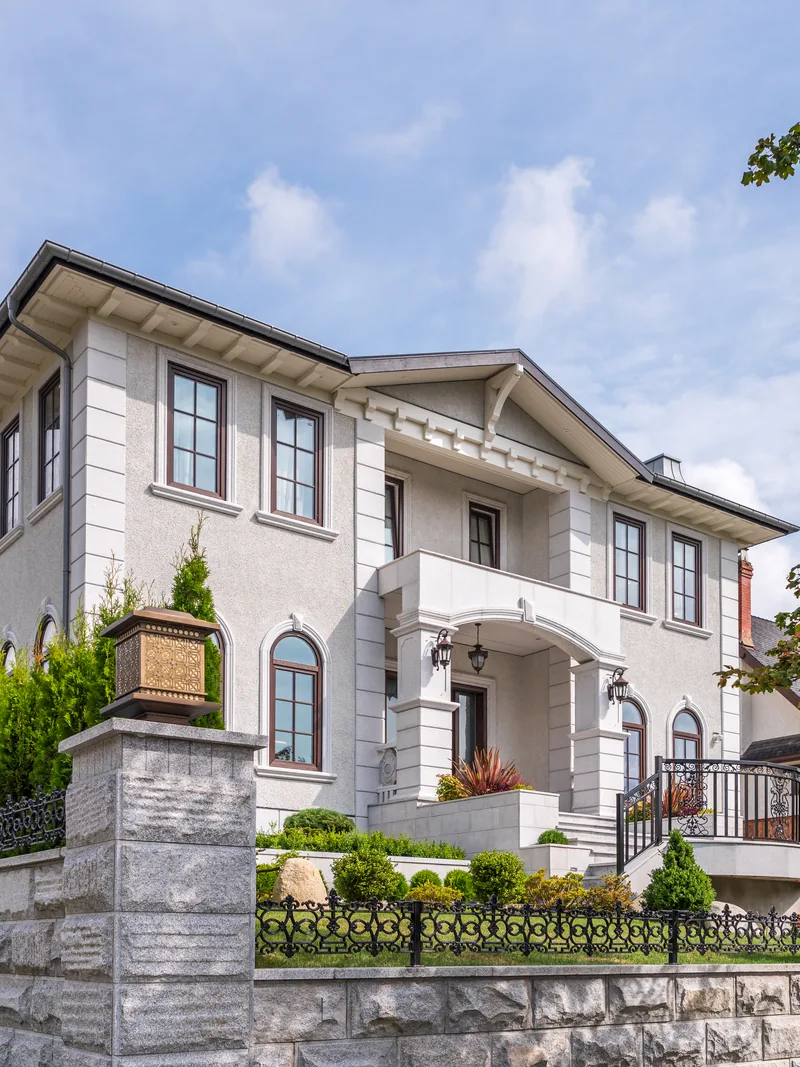
Well-kept stucco home exterior Newer stucco home exterior

About Chico and the Areas We Serve

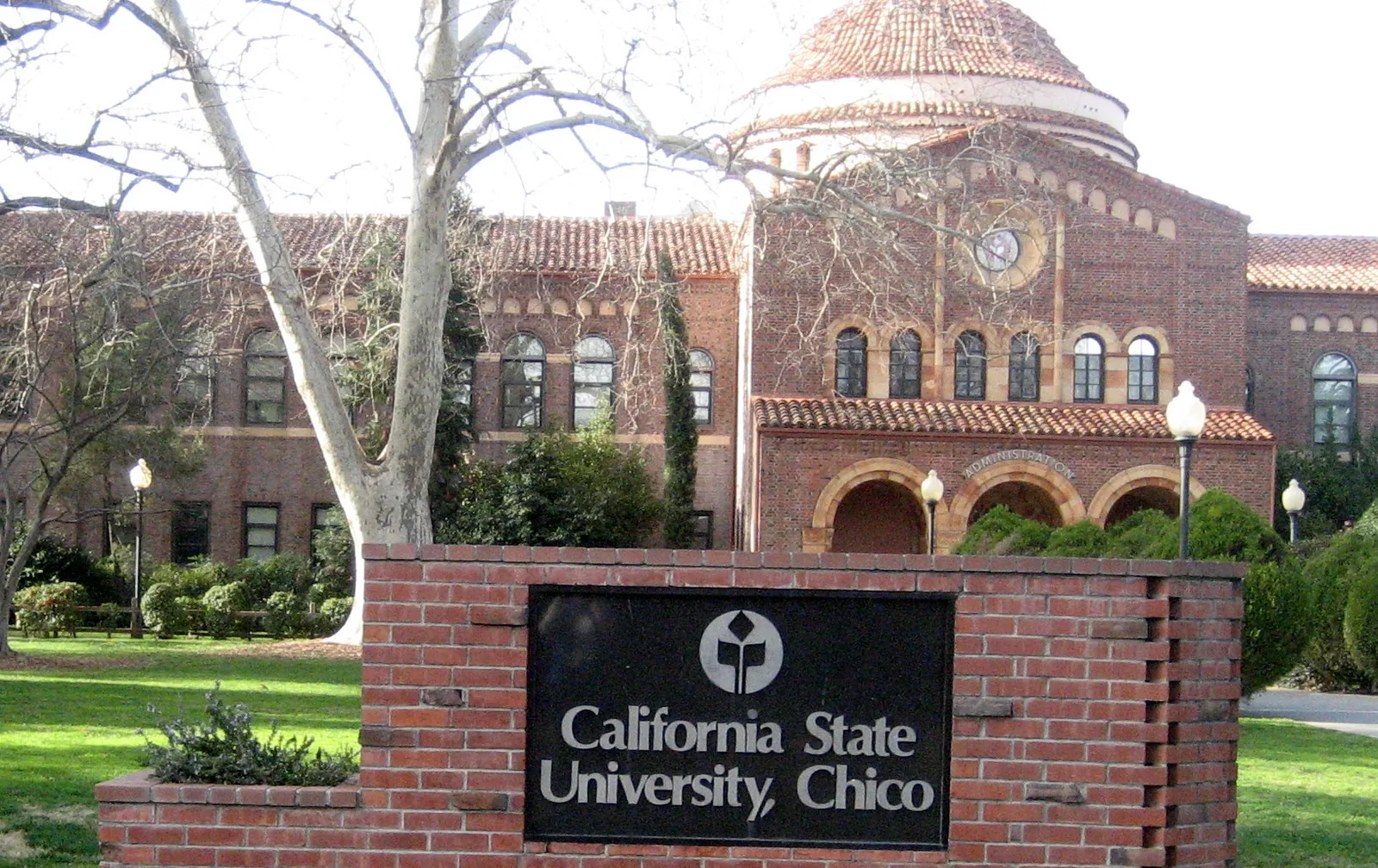
At about 243 feet in elevation, Chico sits along the northeast edge of the northern Sacramento Valley and is Butte County's most populous city. Bidwell Park, the Senator Theatre and California State University, Chico anchor a city where older homes, mid-century tracts and newer subdivisions all bring different stucco assemblies and repair conditions.

That range of building ages is the practical issue for a stucco contractor: a wall built decades ago may require a very different repair or installation approach from a newer one-coat wall. East of Chico, the construction conditions also change as the valley rises toward Paradise, Magalia and the ridge communities.

Neighborhoods We Serve in Chico

  • California Park
  • Canyon Oaks
  • Doe Mill
  • Little Chico Creek
  • Honey Run
  • Stilson Canyon
  • Meriam Park
  • Mansion Park
  • The Avenues
  • Barber
  • Chapman
  • Mulberry
  • East Streets
  • Eastwood
  • Hooker Oak
  • Mission Ranch

Surrounding Service Areas

From Chico, our service area extends east into Paradise, Magalia and Forest Ranch, south through Durham toward Oroville, Biggs and Gridley, west through Hamilton City and Orland toward Willows, and north toward Corning and Los Molinos. We also serve smaller communities between those larger service centers.

  • Durham
  • Hamilton City
  • Paradise
  • Magalia
  • Forest Ranch
  • Cohasset
  • Orland
  • Vina
  • Oroville
  • Biggs
  • Gridley
  • Richvale
  • Butte City
  • Corning
  • Los Molinos
  • Willows

What Chico Homeowners and Builders Say

Frequently Asked Questions About Stucco in Chico

Still deciding? Call us and we will look at the wall.

How Long Does Stucco Last in Chico?

A properly installed traditional three-coat stucco system can last 50 years or longer. The finish and sealants generally need attention well before the underlying plaster does, particularly on Chico walls exposed to strong sun.

How Long Does a Stucco Installation or Replacement Take?

Wall area sets the baseline. Tear-off, repairs uncovered behind the existing stucco, the number of coats and required curing time all affect the schedule. Hot summer weather can also change when individual elevations are worked.

Can Stucco Be Installed Over Existing Siding?

Usually. For a full siding conversion, we typically remove the existing siding so the substrate, water-resistive barrier and lath can be built as a complete stucco assembly.

Can You Repair Only One Section of a Stucco Wall?

Yes, where the stucco around it is still bonded and there is no moisture behind. Matching the texture and color is what decides whether the repair reads as one.

Can a Stucco Crack Come Back After It Is Repaired?

It can, if only the crack was addressed. Cracking driven by ground movement, moisture or joint spacing returns unless the cause is dealt with, which is why we establish it first.

Should I Paint My Stucco or Resurface It?

Paint adds a protective color film over the existing surface. A redash adds a new finish coat with enough body to change both the texture and the color.

How Long Before I Can Paint or Coat New Stucco?

Portland cement stucco commonly needs 28 to 60 days to cure, depending on the system and weather. Applying a coating too soon can trap moisture and cause peeling.

What Is the Difference Between One-Coat and Three-Coat Stucco?

Traditional three-coat stucco uses a scratch coat, brown coat and finish coat over metal lath to create a nominal 7/8-inch hard-coat assembly. One-coat stucco uses an engineered fiber-reinforced base applied in a thinner system over an approved substrate. The right system depends on the building, substrate and project requirements.

Do You Have to Remove Old Stucco Before Installing New Stucco?

Not always. Sound existing stucco can sometimes be resurfaced with a new finish coat rather than removed. Full removal is more appropriate where the existing assembly is deteriorated, poorly bonded or has moisture or drainage problems behind the finish.

Can New Stucco Match the Existing Stucco on My House?

Usually, although age and weathering make the match more involved than choosing a color from a chart. We match both texture and color on a sample before applying the finish. On additions and localized repairs, the goal is to blend the new work into the surrounding wall as closely as practical.

What Causes Stucco to Bulge or Sound Hollow?

A bulge or hollow sound can indicate that the plaster has lost its bond to the material behind it. The affected area needs to be evaluated before it is patched because the visible surface may not show how far the loss of bond extends.

Can a Handyman Do Stucco?

Small cosmetic patches may fall within limited handyman work, but larger stucco projects in California generally require a properly licensed contractor. Full-wall work also involves the water-resistive barrier and metal lath behind the finish, where installation errors can lead to moisture problems.

Will Insurance Pay for Stucco Repair?

Policies usually turn on whether the damage was sudden and accidental. Gradual wear is normally excluded. Your insurer decides, usually on a documented inspection report.

Get a Free Stucco Estimate in Chico

Tell us what your wall is doing, such as cracking, bulging, staining, or shedding its finish. Photographs help us understand the visible condition before the visit. Call Chico Elite Stucco at (530) 783-7384 or use the quote form to schedule a free on-site estimate across Chico and Butte County with a local stucco contractor.